Traditions, meaning and highly colorful festivities
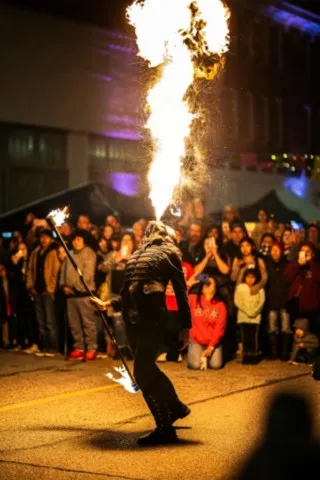
La fête des morts au Mexique, également appelée Día de los Muertos, représente l'une des traditions les plus emblématiques de la culture mexicaine. Célébrée les 1er et 2 novembre, elle rend hommage aux êtres chers disparus. Loin d'être une commémoration uniquement solennelle, cette fête est une célébration colorée et joyeuse, pleine de vie et de traditions uniques.
During Day of the Dead, Mexico transforms into a vibrant and colorful spectacle, with richly decorated altars, offerings of food and flowers, and parades filled with music and dance.
The streets are filled with families who go to the cemeteries to clean and decorate the graves of their loved ones, because the souls of the deceased are said to return to enjoy the food and festivities offered.
This festival is a blend of pre-Hispanic and Catholic traditions that fuses Mexican indigenous culture with Spanish influence. Day of the Dead is an opportunity to remember and honor our loved ones, but it is also a celebration of life and a massive demonstration of Mexico’s cultural wealth.
Immerse yourself in the fascinating world of Day of the Dead, where death takes on colors and traditions come to life.
Discover the meaning of the skull masks, the offerings and the cempasúchil flowers by immersing yourself in one of the most symbolic and appreciated festivals of Mexico.
Les secrets du Jour des Morts: aux origines d'une tradition
The Day of the Dead is a celebration that transcends the boundaries of time and space, connecting past and present generations in an act of remembrance and love.
Every year, on November 1st and 2nd, Mexicans dress up to welcome the souls of their missing loved ones.
This festival, recognized by UNESCO as an intangible cultural heritage of humanity, is a sample of the rich cultural heritage that characterizes Mexico.
Unlike other commemorations related to death, the Day of the Dead is a time of joy, where life is celebrated in its entirety, including the remembrance of those who have passed away.
The streets are adorned with a myriad of colors: yellows, oranges, and violets blend together in a visual spectacle that invites reflection and celebration. Families gather to share stories and laughter, in memory of those who have departed, but whose memory remains present in the hearts of those who love them.
This festival is not limited to the memory of the dead; it also reaffirms the connection between the world of the living and the world of the dead, creating a space where the two can coexist, even if only for a brief period of time.
Day of the Dead is a reflection of the Mexican worldview, which views death not as an end but as a stage in the cycle of life.
The blend of indigenous traditions and Catholic elements has given rise to a unique celebration, where altars, offerings, and rituals intertwine to offer a vibrant and meaningful tribute to those who have left us.
As we delve into this fascinating world, we will discover the cultural and spiritual context that makes Day of the Dead one of the most beloved and respected holidays in Mexico.
Want an exceptional stay in Playa del Carmen?
Enjoy the comfort of a high-end apartment, owned by a French citizen, ideally located a few steps from the beach and the famous 5th Avenue. Enjoy a modern, fully equipped environment designed to combine relaxation, elegance and practicality.
High-speed Wi-Fi, air conditioning, a rooftop with a swimming pool (the Vedra suite)… everything is there to create a unique experience under the Caribbean sun.
Origin and meaning of the Day of the Dead
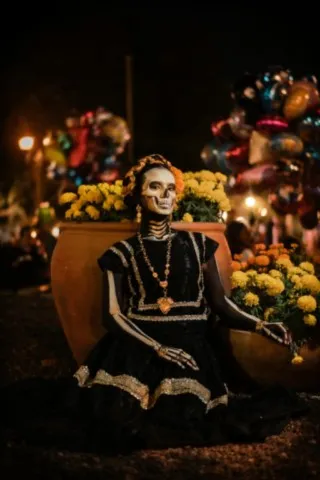
The origin of the Day of the Souls dates back to the Pre-Hispanic era, when various indigenous cultures of Mexico, such as the Mexica, the Purepecha, and the Maya, paid tribute to their ancestors. For these civilizations, death was considered a natural aspect of existence and should not be feared.
On the contrary, they celebrated the lives of the deceased and believed that their spirits returned to visit their loved ones at specific times of the year. This connection with the afterlife was maintained through rituals and offerings in honor of the dead.
With the arrival of the Spanish colonists in the 16th century, many of these traditions merged with Catholic beliefs, giving rise to the celebration we know today.
The day of the Celebration of Ancestors It was created to commemorate the deceased and coincides with the Catholic holidays of All Saints' Day and All Souls' Day. This cultural fusion has allowed indigenous traditions to endure while incorporating elements of Christianity, thus creating a syncretism characteristic of Mexican culture.
The significance of Day of the Dead goes beyond mere commemoration of the deceased. It is a celebration of life, a moment of reflection on the legacy we leave behind and the impact we have had on those around us.
It reminds us that love and memory can transcend death and that life continues to flow through shared stories, laughter, and memories.
This festival therefore not only pays tribute to the dead, but also celebrates life itself, in a perpetual cycle of love and remembrance.
Rituels ancestraux du jour des morts
The traditions of Day of the Dead hold a key place in Mexican culture. Every year, families gather to pay tribute to their loved ones who have passed away through ceremonies, decorations, and rituals passed down from generation to generation.
Among the most emblematic traditions are the commemorative altars, called ofrendas. They are decorated with photographs, candles, flowers, food, and objects that remind us of the people they are dedicated to.
The cempasúchil flowers, recognizable by their bright orange color, hold a special place in these celebrations. They adorn altars, houses, and cemeteries.
Families also go to the cemeteries to clean and decorate the graves. Music, memories, and moments of sharing accompany these gatherings.
In many Mexican cities, the streets are filled with parades, traditional costumes, and artistic performances. The famous figures of calaveras and Catrinas contribute to the visual identity of this festival.
These traditions make Día de los Muertos a celebration deeply rooted in the history and cultural identity of Mexico.
Un jour très particulier dans la riviere Maya
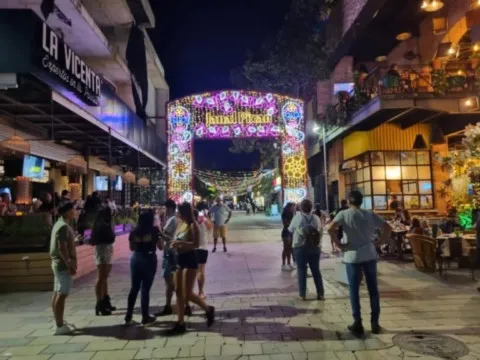
The traditions surrounding "Día de Muertos" (the original Spanish term) are diverse and vary from region to region, but they all have one thing in common: the desire to honor and remember the loved ones who have passed away.
One of the most important rituals is the creation of altars, also called «ofrendas», which are erected in homes and cemeteries.
These altars are decorated with photographs, personal items, and the deceased's favorite foods, creating a sacred space where the living can communicate with the dead. Families spend time preparing these altars, ensuring that every detail reflects the love and respect they feel for the deceased.
Another important tradition is visiting the cemeteries. On All Saints' Day, families gather in the cemeteries to clean and beautify the graves of their loved ones.
It is customary to bring flowers, especially cempasúchil, which symbolizes the cycle of life and death.
Families often spend the night in the cemetery, sharing anecdotes and memories, creating an atmosphere of community and love that transforms the place into a space of celebration rather than sadness.
This ritual highlights the permanent link between the living and the dead, showing that, even though they are physically absent, their spirits live on in the collective memory.
Parades and public celebrations are also an essential element of the celebration. In many cities, parades are organized, during which people wear traditional costumes and paint skulls, symbolizing joy and acceptance of death.
Dances, music, and fireworks fill the streets, creating a festive atmosphere that contrasts with the solemnity often associated with death.
These celebrations not only pay tribute to the deceased, they also strengthen community ties and allow new generations to connect with their roots.
Preparations and decorations for All Saints' Day
Preparations for the Day of the Dead begin weeks before the holiday, with families organizing everything necessary to honor their loved ones. One of the most important elements of these preparations is the decoration of altars, which are adorned with various symbolic elements.
The flowers of Cempasúchil, of bright orange color, are indispensable on any altar, because their fragrance is said to guide souls towards their home. In addition, families often add papel picado, which represents the wind and the fragility of life, as well as candles that illuminate the path of spirits.
Food also plays a crucial role in the celebration. Families prepare traditional dishes that the deceased loved, from tamales to pan de muerto to fruits and sweets.
This act of cooking and sharing food is a way of keeping alive the memory of those who have passed away, and often involves family recipes that have been passed down from generation to generation.
The preparation of these dishes becomes a community activity, where each member of the family contributes their share, thus strengthening family ties.
The altars are not only decorated with physical elements; they are also filled with love and memories. Photographs of the deceased, as well as objects representing his passions and hobbies, make each altar unique and personal.
Some include letters written to the deceased, memories of shared moments, and even songs that the deceased loved.
The decoration process is not only an act of homage, but also a way to remember and celebrate the lives of the deceased, ensuring that their legacy continues to live in the hearts of the living.
Offerings and altars in honor of the dead
The ofrendas are a fundamental element of the Day of the Dead, because they serve as a bridge between the living and the dead. Each altar, or ofrenda, is meticulously designed to provide everything the deceased would need upon their return to the world of the living.
In its construction, it is common to use several levels, each representing a different aspect of life and death.
The first level generally includes a cross, which symbolizes faith, while the upper levels can be adorned with photographs and personal objects of the deceased, thus creating an intimate and meaningful space.
The elements of the offerings are carefully selected and have specific meanings. For example, sugar skulls are a popular symbol representing death in a playful and festive way.
These skulls are decorated with bright colors and often bear the name of the deceased on the forehead.
In addition, the pan de muerto, a type of sweet bread shaped like a skull, is a food offered in the ofrendas to share the food with the returning souls.
Each element is chosen with love, reflecting the relationship and memories the family had with the deceased. The offerings also include elements related to the four elements of nature: water, earth, fire, and air.
The water is placed in a vessel to quench the thirst of the souls, while the earth is represented by the base of the altar.
The candles represent the fire, which illuminates the path of return for the spirits, and the shredded paper symbolizes the air, adding a touch of fragility to the celebration.
This combination of elements not only makes the offerings visually appealing, but also gives them a deep spiritual meaning, making each altar a respectful and affectionate tribute to those who have left us.
Typical foods of All Souls Day
The gastronomy of Day of the dead It is as rich and varied as the traditions that surround it. Each dish has a purpose and a particular meaning, transforming the meal into a ritual that goes beyond mere consumption.
One of the most emblematic foods of this festival is the pan de muerto, a sweet bread made specifically for the occasion. Its shape, which resembles a skull, and its flavor, which can vary from orange to vanilla and aniseed, make it a symbol of the festival.
This bread is not only offered in the ofrendas; it is also enjoyed by the family, creating a moment of conviviality and shared memories.
Another typical dish is mole, the preparation of which can vary depending on the region.
This stew, made with peppers, spices, chocolate and other ingredients, is a delicate dish that reflects the richness of Mexican cuisine. On the occasion of the Day of the Dead, many families prepare mole to share during family meals, in order to honor the deceased while enjoying a dish filled with history and flavors.
Mole is a perfect example of how food can be a vehicle of memory, bringing flavors to the table that evoke family moments and traditions.
In addition to these dishes, fruits, sweets, and beverages also play an important role during the celebration. Sugar skulls, pumpkin candies, and fresh fruits are common in the ofrendas, symbolizing the joy and abundance desired for the souls who return.
Families also often prepare traditional drinks such as atole and tequila, which are offered to spirits to commemorate their memory.
Ultimately, the food of the Day of the Dead is not just a way to satisfy the palate, but also a way to celebrate and remember.
Parades and festivities on All Saints' Day in Mexico
The parades and festivities that accompany them The celebration of the dead They are a vibrant show that attracts thousands of people from all over the world.
In many cities, especially in Mexico, large parades celebrate life and death through music, dance, and art. During these events, the streets fill with people dressed in traditional costumes, painted with skulls, and carrying offerings in honor of their loved ones.
The atmosphere is festive, the mariachi music resonates in the air and the folkloric dances celebrate the country's rich cultural heritage.
One of the most emblematic parades is that of the Day of the Disappeared, organized in Mexico. This event, which has gained in popularity in recent years, brings together artists, communities, and families to pay tribute to the deceased.
Decorated floats, theatrical and musical performances offer an impressive spectacle that reflects the diversity and creativity of the Mexican people. This parade not only attracts tourists; it is also a way for Mexicans to reaffirm their cultural identity and their attachment to their traditions.
In addition to the parades, many localities organize festivals that include fairs, exhibitions, and cultural activities. These events are an opportunity for communities to come together, celebrate, and share their traditions with others.
The Day of the Dead fairs offer crafts, live music, traditional food, and activities for children, creating a family atmosphere that fosters cohesion and an understanding of the history and meaning of the festival.
The festivities allow the residents and visitors to immerse themselves in Mexican culture and to understand the depth of love and respect.
Influence of Day of the Dead on Mexican art and culture
The commemoration of the dead He left an indelible mark on Mexican art and culture, inspiring artists and creators in various disciplines. The skulls, in particular, have become an emblematic symbol of the festival and often appear in works of art, crafts, clothing, and decoration.
Artists such as José Guadalupe Posada, known for his skull engravings, helped popularize these images, which represent a celebration of life and death. The sugar skulls and papier-mâché figurines are examples of the influence of this festival on aesthetics and creativity in Mexico.
The influence of Día de Muertos extends to cinema and literature as well. Films such as Pixar's «Coco» have made this festival known to an international audience, highlighting the importance of memory and family heritage.
This film not only entertained but also educated people about the traditions and cultural richness of All Saints Day, thus sparking greater interest in this festival. Moreover, many writers have explored the theme of death and remembrance in their works, using All Saints Day as a context to reflect on Mexican life and culture.
Contemporary art has also taken an interest at the festival of the dead, With exhibitions and projects highlighting the connection between life and death, modern artists have reinterpreted the traditions of All Saints' Day, creating works that question conventional perceptions of death and celebrate Mexican cultural heritage.
This influence is manifested through murals, installations, and other forms of artistic expression that celebrate not only the festival but also the identity and diversity of the Mexican people.
Thus, the Day of the Dead has become a symbol of cultural resistance, showing how traditions can evolve and adapt over time.
Conclusions : La signification culturelle du jour des morts au Mexique.
The Day of the Feast of the Souls est bien plus qu'une fête, c'est une manifestation profonde de l'identité culturelle mexicaine. À travers ses traditions, ses rituels et ses festivités, cette fête reflète la manière dont les Mexicains abordent la mort, transformant un sujet souvent tabou en une célébration de la vie.
La possibilité d'honorer les morts tout en célébrant l'existence des vivants est une reconnaissance de l'interconnexion des deux mondes. Cette dualité est fondamentale dans la vision mexicaine du monde, où la mort n'est pas une fin, mais une continuité de la vie.
In addition, the Day of the deceased renforce les liens familiaux et communautaires, encourageant l'unité et l'amour entre les générations. Les réunions de famille, la préparation des autels et les visites aux cimetières sont autant d'occasions de partager des histoires, des souvenirs et des traditions qui perpétuent la mémoire de ceux qui nous ont quittés.
La célébration devient un acte de résistance culturelle, où les communautés préservent leurs racines et se connectent à leur passé, en veillant à ce que les générations futures comprennent et apprécient leur héritage.
Enfin, l'influence du Día de Muertos dépasse les frontières du Mexique, attirant l'attention et l'émerveillement de personnes du monde entier.
La célébration a acquis une reconnaissance internationale et son symbolisme a été adopté dans diverses cultures, montrant comment la mort et le souvenir peuvent être célébrés de manière vivante et significative.
En fin de compte, le Día de Muertos rappelle que, bien que la mort fasse inévitablement partie de la vie, l'amour et la mémoire perdurent, créant un héritage qui transcende les générations.
Pour mieux comprendre le Jour des Morts au Mexique
Pourquoi le Jour des Morts au Mexique est-il reconnu par l'UNESCO ?
Le Jour des Morts au Mexique, également appelé Día de Muertos, est une tradition profondément ancrée dans la culture mexicaine. Elle associe des croyances préhispaniques et des influences catholiques pour honorer la mémoire des personnes disparues.
En 2008, les fêtes indigènes dédiées aux morts ont été inscrites sur la Liste représentative du patrimoine culturel immatériel de l'humanité. Cette reconnaissance souligne leur importance pour la transmission des traditions et le maintien des liens communautaires.
Pour découvrir l'origine et la portée culturelle de cette célébration, consultez la présentation officielle de l'UNESCO .
Quelles sont les traditions les plus importantes du Día de Muertos ?
Les traditions du Día de Muertos reposent principalement sur la création d'autels commémoratifs, appelés ofrendas. Les familles y déposent des photographies, des bougies, des fleurs de cempasúchil, des aliments et divers objets symboliques en souvenir de leurs proches.
Les visites aux cimetières, les réunions familiales et la préparation de spécialités comme le pan de muerto occupent également une place importante dans cette fête. Selon les régions du Mexique, les coutumes et les cérémonies peuvent varier.
À travers ces rituels, le Jour des Morts célèbre la mémoire, la transmission des traditions et l'attachement des familles à leur patrimoine culturel.
Explore Playa del Carmen and discover what to do
Pour profiter au maximum de votre voyage à Playa del Carmen, consultez ces guides complets avec les meilleurs conseils :
- Where to stay in Playa del Carmen The best neighborhoods to live in
- 5th Avenue Playa del Carmen What to do: shops and restaurants
- The most beautiful beaches in Playa del Carmen : complete guide
- The cenotes in Playa del Carmen : Where to swim and advice
- Climate in Playa del Carmen by month : Best time to travel


